




MBA in Retail Management: Eligibility, Syllabus, Fees, Colleges & Career Scope
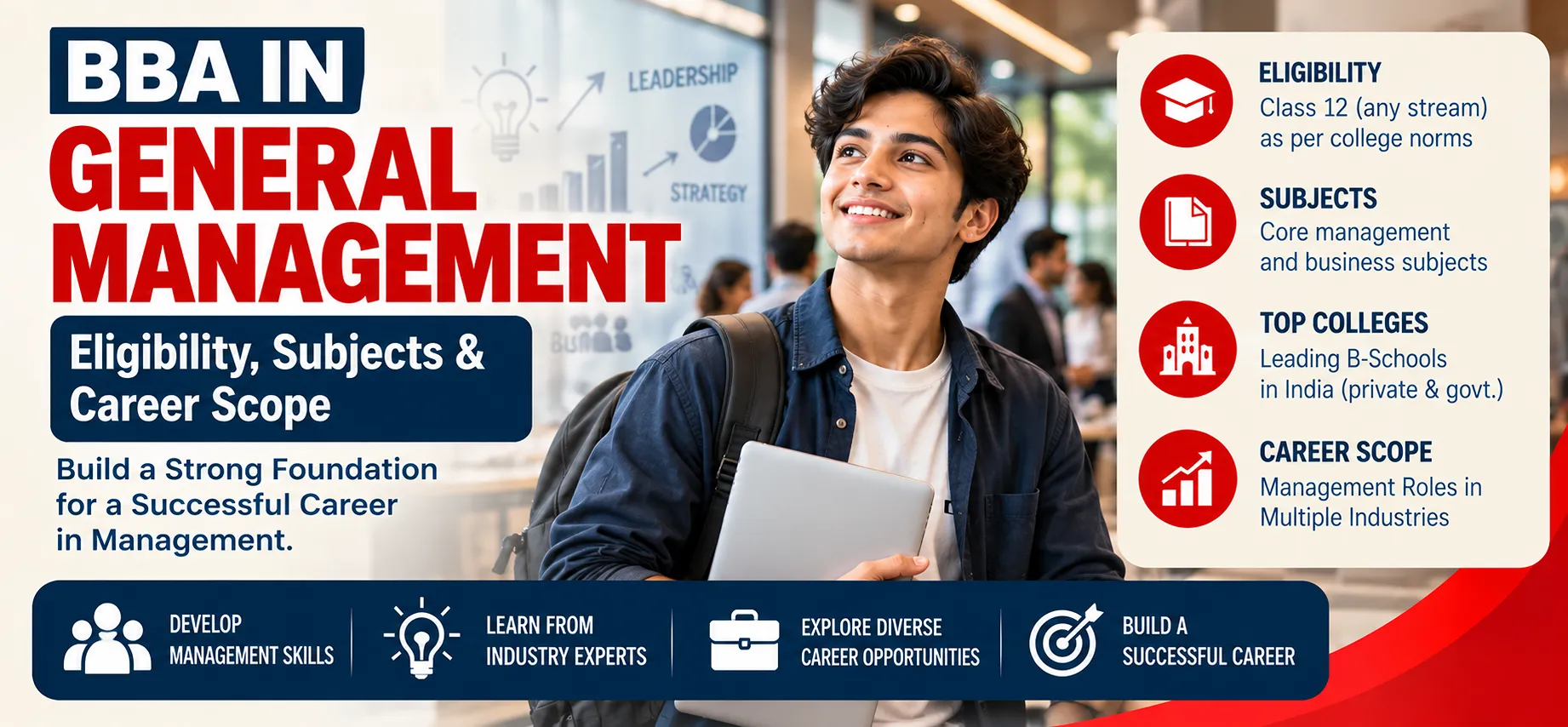
Retail today goes far beyond managing stores. It includes customer experience, merchandising, supply chains, e-commerce, branding, analytics, and…
Read More →

Choosing an MBA after a BA can be a smart move if you want to shift from a general academic background to a more career-focused path in business, management, marketing, finance, HR, consulting, or entrepreneurship. A BA degree builds communication, analytical, and problem-solving skills, while an MBA can add commercial knowledge, leadership exposure, and stronger job opportunities. However, the right choice depends on your career goals, preferred specialisation, entrance exam plans, and expected return on investment. Before deciding, it helps to first understand whether pursuing an MBA after a BA actually makes sense for your career and what advantages it can offer.
BA graduates from any stream are eligible for most MBA programmes in India. Institutes admit candidates based on graduation performance and entrance exam scores. BA graduates in English, Economics, History, Psychology, Political Science and other disciplines all qualify. Most institutes rarely disqualify candidates for lacking a science or commerce background. Communication, critical thinking, and analytical skills from a BA add real value in management roles. With JIIT Online, you can also get career counselling and choose the best-suited MBA stream for you after your BA degree.
Eligibility rules follow the standard MBA framework with no stream-based restrictions at most institutes. Requirements vary, and applicants should verify criteria for each college.
UGC entitled online MBAs at providers like JIIT Online offer merit-based admission without an entrance exam. Some institutes may test quantitative aptitude during shortlisting, so BA graduates without a maths background should prepare accordingly.
BA graduates take the same national entrance exams as other MBA applicants. The exam choice depends on target colleges.
| Entrance Exam | Conducting Body |
| CAT | IIMs (rotational) |
| XAT | XLRI Jamshedpur |
| CMAT | NTA |
| MAT | AIMA |
| NMAT | GMAC |
| SNAP | Symbiosis International University |
| GMAT | GMAC |
BA graduates align well with specialisations that build on communication, analysis and interpersonal skills. The table below maps common BA backgrounds to suitable MBA tracks and career areas.
| BA Background | Suitable MBA Specialisation | Career Area |
| English or Literature | Marketing, HR | Content, brand, communications, talent |
| Economics | Finance, Business Analytics, Economics | Investment banking, analytics, research |
| Psychology | HR, Marketing | Talent management, consumer insights, coaching |
| Political Science | International Business, Public Policy | Government relations, diplomacy, policy consulting |
| History | General Management, Marketing | Brand, strategy, cross-functional management |
| Sociology | HR, Marketing, CSR | People operations, brand purpose, sustainability |
| Journalism | Marketing, Media Management | Brand, PR, media strategy, content |
Full-time MBA programmes run for two years across four semesters. Online MBAs at UGC-DEB-entitled providers also run for two years with flexible completion up to four years. Part-time and executive MBAs typically span 15 to 24 months for working professionals. Fees vary by format and brand. Premium institutes charge ₹15 to ₹25 lakh, private universities charge ₹3 to ₹10 lakh, and UGC-entitled online MBAs charge ₹1.5 to ₹2.5 lakh, with Zero Cost EMI options. Verify current tuition on institute pages before applying.
BA graduates with an MBA enter roles across marketing, HR, business development, operations and analytics. Communication strengths from a BA background carry weight in client-facing and people-oriented functions.
| Role | Typical Function |
| Marketing Manager | Brand strategy, campaigns, consumer research |
| HR Manager | Talent acquisition, learning, employee relations |
| Business Development Manager | Client acquisition, partnerships, revenue growth |
| Financial Analyst | Financial modelling, forecasting, reporting |
| Operations Manager | Process design, service delivery, cost management |
| Management Consultant | Strategy, operations and market entry projects |
| Entrepreneur | New venture creation or family business roles |
Starting salaries range from ₹5 to ₹20 lakh depending on institute brand, sector and role. Marketing and HR tracks pay well for BA graduates with strong communication skills. Finance and analytics tracks may require additional quantitative preparation for a smoother transition.
Choosing the right MBA programme after a BA needs a structured evaluation across several factors. The checklist below covers the most important ones.
Weight each factor against your career vector and financial situation. Speak to current students or recent alumni before finalising. Programmes that score high on curriculum and career support usually deliver better long-term outcomes than brand-heavy alternatives.
An MBA after a BA opens management, business and leadership careers for arts graduates. Match your specialisation to your BA background and career goals. Verify fees and admissions on official pages, then apply to JIIT Online at admission.jiitonline.com if the online route fits your plans.
Yes. A three-year BA from a recognised university is accepted for MBA admission at most Indian institutes, subject to the minimum aggregate requirement.
No. Mathematics is not a compulsory prerequisite. However, quantitative aptitude appears in most entrance exams and supports analytics and finance specialisations.
Yes. All BA specialisations qualify for MBA admission. Marketing, HR and general management tracks fit well with these backgrounds.
CAT, XAT, CMAT, MAT, NMAT, SNAP and GMAT are widely accepted. Merit-based admission is available at UGC entitled online MBA providers.
Yes. Online MBAs at UGC-DEB-entitled providers are designed for working professionals with live evening classes and recorded lectures.

Retail today goes far beyond managing stores. It includes customer experience, merchandising, supply chains, e-commerce, branding, analytics, and…
Read More →
An MBA after B.Sc can be a strong next step if you want to combine your science background…
Read More →
An MBA after B.Tech combines engineering fundamentals with management, finance and business strategy skills. It opens a new…
Read More →
Want to earn an MBA without stepping away from your job or other responsibilities? The benefits of an…
Read More →
If you have completed MBBS and are wondering what else you could do beyond clinical practice, an MBA…
Read More →
If you are interested in how businesses trade, grow and build connections across countries, an MBA in Foreign…
Read More →
Choosing an MBA institute is a big decision because the college you pick can affect how you study,…
Read More →
Thinking about a career in real estate but not sure what the business side involves? An MBA Real…
Read More →
Completed CA and thinking about your next step? An MBA after CA can help you build management, strategy,…
Read More →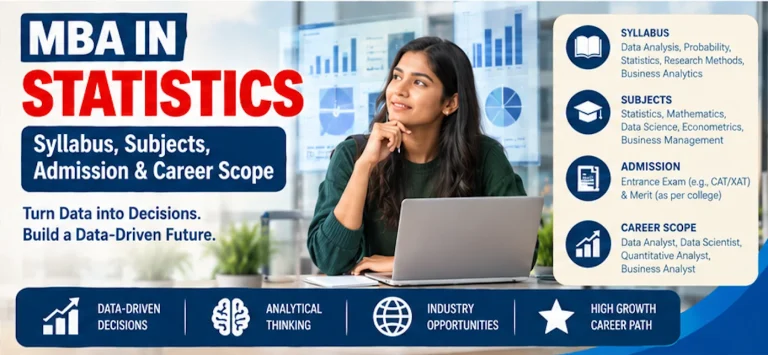
If you have a knack for numbers and enjoy understanding what data is telling you, MBA Statistics may…
Read More →