

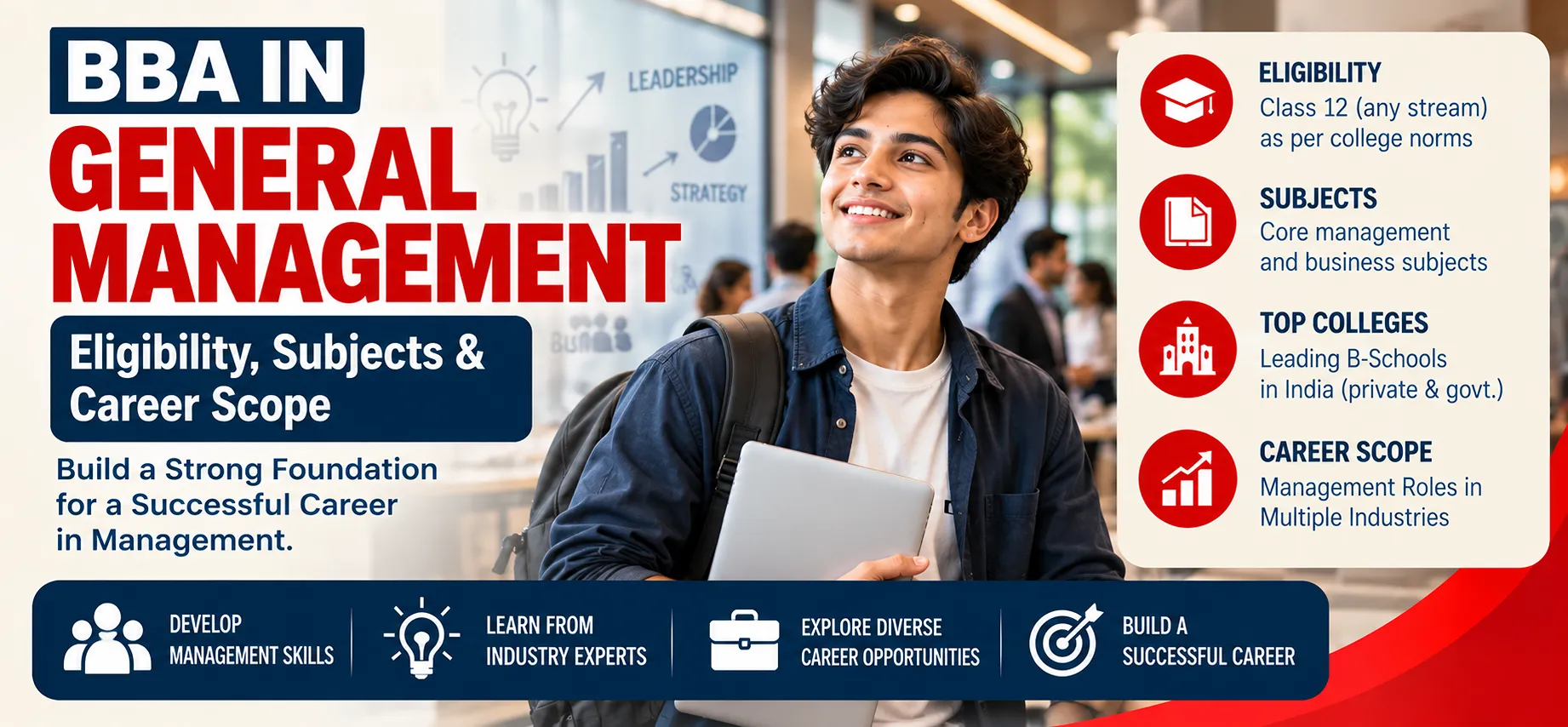




BBA in General Management: Eligibility, Subjects & Career Scope
A BBA in general management is a three-year undergraduate business degree covering management fundamentals, marketing, finance, HR, operations,…
Read More →
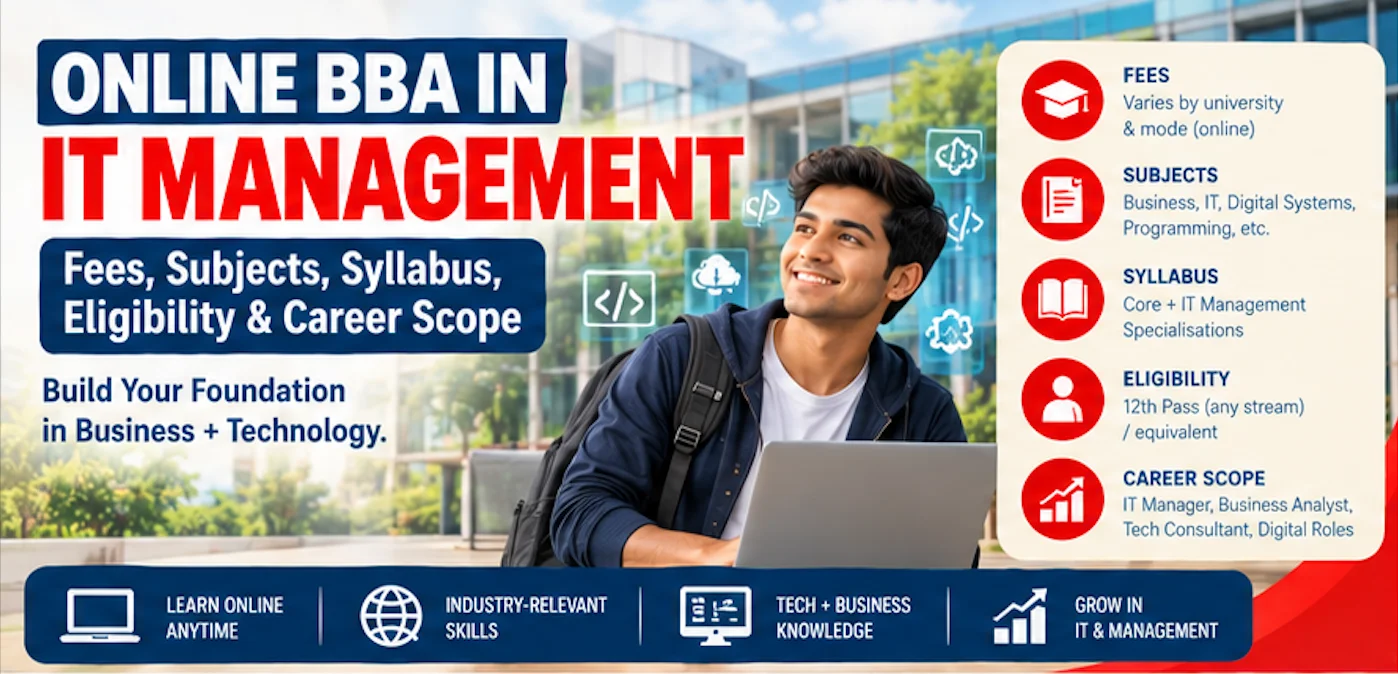
Technology now plays a big role in how businesses work, and a BBA IT course helps you understand both sides. If you like the idea of understanding how companies work while also getting comfortable with the tools and systems they use, this course is for you. The BBA IT subjects cover business management, commerce and information technology across a three-year undergraduate degree, helping you build both business knowledge and practical technology awareness.
BBA Information Technology subjects bring together management fundamentals, business applications, analytics and technology. Students explore business areas such as marketing, finance, HR and operations alongside IT-focused topics such as MIS, ERP, business analytics and e-business. The course focuses more on using technology in business than on advanced programming or software engineering. This makes it suitable for students interested in technology-driven business roles.
BBA IT runs across three years and six semesters. The subjects below cover the typical yearly structure.
Electives typically include AI in Business, Cyber Security Fundamentals, Cloud Computing Basics and Data Analytics. The exact split by semester varies across universities.
The programme usually combines two areas, business management and information technology. This mix gives BBA IT a blend of management knowledge and practical technology awareness.
Together, these subjects help you understand both business needs and the technology that supports them.
BBA IT can be a good fit if you’re interested in technology but also enjoy business, management, or working with people and processes. It differs from a BTech or BE in Computer Science, which goes much deeper into programming, algorithms, and software development.
BBA IT can prepare students for areas such as IT consulting, business analysis, product support, technology sales and digital business. If your goal is mainly coding or software engineering, a more technical degree such as BTech or BSc IT may be a better match.
The mix of business and technology in BBA IT can lead to roles where you work between technical teams, customers and business functions. Common career options include:
Starting salaries range from ₹3 to ₹8 lakh depending on the institute and role. Career progression accelerates with an MBA program or specialised certifications in analytics, cloud or product management.
Not sure whether to choose BBA IT or a general BBA? The main difference is how much technology you want as part of your business degree.
| Factor | BBA IT | BBA General |
| Core Focus | Business with IT orientation | Broad business fundamentals |
| IT Depth | Moderate through MIS, ERP, analytics | Basic computer applications only |
| Career Paths | IT services, tech-adjacent business | Broad business functions |
| Skills Developed | MIS, database, ERP, e-business | Marketing, finance, HR, operations |
| Suitable For | Tech-inclined business students | Business-oriented generalists |
BBA IT subjects give students a blend of business fundamentals and technology skills across six semesters. Match the programme to your career goals, whether IT consulting, tech sales or product management. Apply to JIIT Online at admission.jiitonline.com for a UGC entitled online BBA at ₹1,39,000 with Zero Cost EMI.
No. BBA IT is designed for students without prior coding experience. The curriculum introduces IT concepts gradually alongside business subjects.
BBA IT includes limited coding through IT applications, database management and web technologies. It is not a coding-intensive programme like BTech CSE.
Business Mathematics and Statistics are core subjects but not equivalent to Class 12 Maths. Students without Class 12 Maths can pursue BBA IT at most universities.
BBA covers broad business fundamentals. BBA IT combines business subjects with IT topics like MIS, ERP, business analytics and e-business.
IT business analyst, digital marketing, business development, product coordinator, MIS executive, ERP consultant and e-commerce operations roles.
Yes. BBA IT graduates are eligible for MBA admission across all specialisations. Business Analytics, IT Management and General Management are common pivots.
Yes, for tech-adjacent business roles. It is not suitable for deep engineering, software development or coding-heavy careers, which need BTech or BE.
Yes. Business Analytics is a core subject at most universities. AI and Machine Learning are often offered as electives or emerging technology modules.
Microsoft Excel, SQL, Power BI, Tableau, ERP software like SAP, database management systems and web development basics.
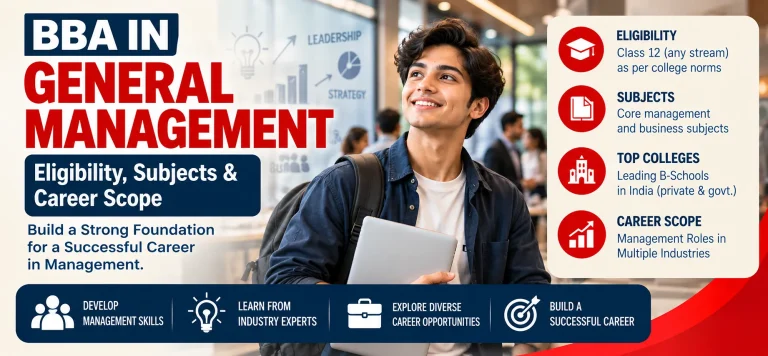
A BBA in general management is a three-year undergraduate business degree covering management fundamentals, marketing, finance, HR, operations,…
Read More →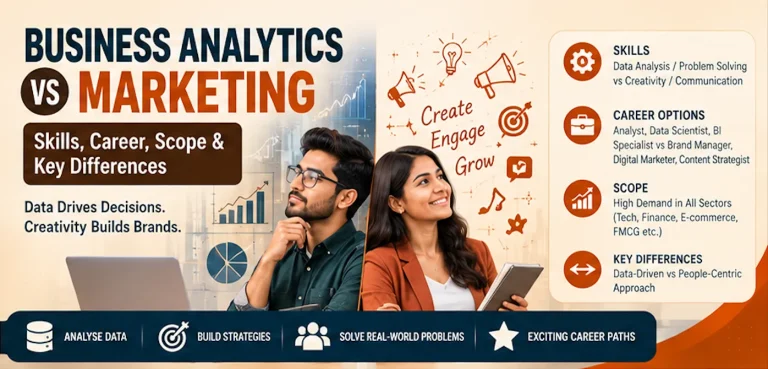
Trying to choose between business analytics and marketing? The two can lead to very different day-to-day work, even…
Read More →
Ever thought about what happens after you place an online order and before it reaches your doorstep? A…
Read More →
Ever wondered how a business can sell, grow, and compete in different countries? A BBA in Global Business…
Read More →
Just finished Class 12 and interested in how businesses work across countries? A BBA in Foreign Trade can…
Read More →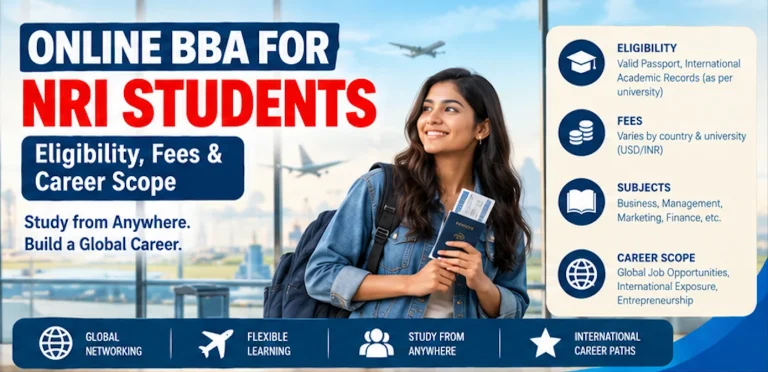
Want to pursue a BBA from India while continuing to live abroad? An online BBA for NRI students…
Read More →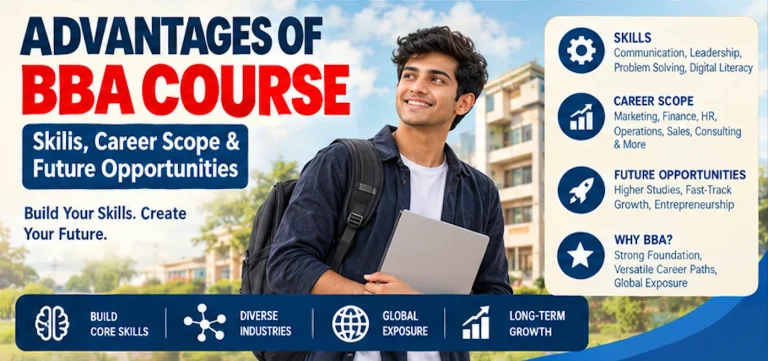
Not sure which area of business interests you most yet? A BBA gives you the chance to explore…
Read More →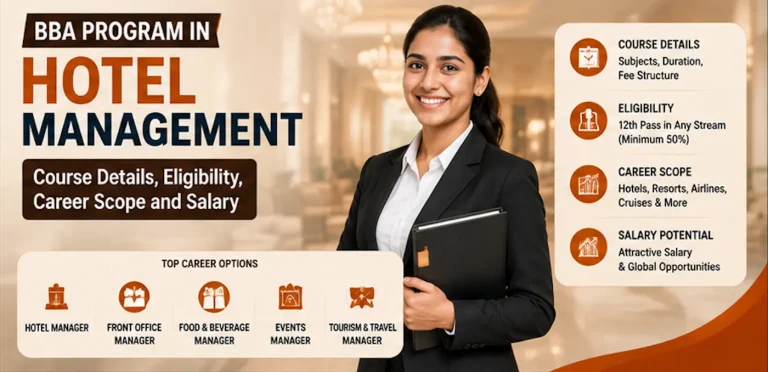
A BBA in Hotel Management suits students who want to understand the business side of hospitality, including hotel…
Read More →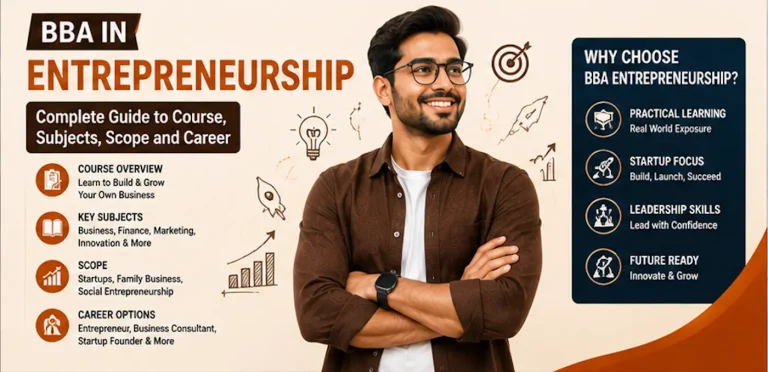
A BBA in Entrepreneurship can suit students who want to understand how ideas become viable businesses, whether they…
Read More →
A BBA can lead directly to entry-level business roles, postgraduate study, professional certifications or entrepreneurship. The right route…
Read More →