







MBA in Retail Management: Eligibility, Syllabus, Fees, Colleges & Career Scope
Retail today goes far beyond managing stores. It includes customer experience, merchandising, supply chains, e-commerce, branding, analytics, and…
Read More →
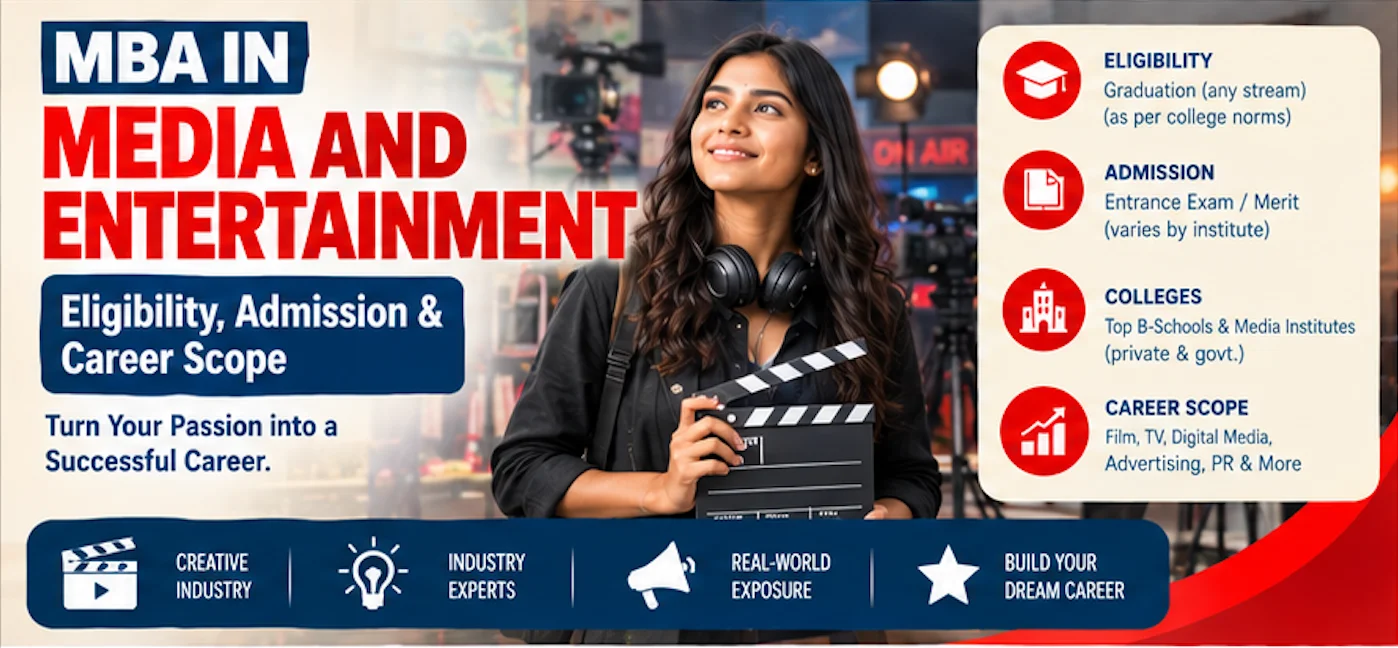
If you are interested in both the creative side of media and the business behind it, an MBA in Media and Entertainment can bring the two together. It can help you build management skills while staying connected to fast-moving areas such as film, television, OTT, advertising, gaming and digital media. The course can be useful if you want to work where creative ideas, audiences and business decisions meet.
An MBA in Media and Entertainment is a postgraduate management degree that focuses on how media and entertainment organisations are planned, managed and grown. The curriculum usually combines core MBA subjects with areas such as media management, content strategy, advertising, audience analytics and digital platforms. Some universities may also offer similar programmes under names such as MBA in Media Management or MBA Media Management.
Before choosing a mba programme, it’s best to understand what the course usually includes. The detailed structure varies by university.
Since course structures can change, check the latest curriculum and electives before applying.
You can apply for an MBA in Media and Entertainment with a bachelor’s degree from any recognised discipline. A media or communication background is not always required. However, some institutes may also consider creative aptitude or a portfolio during admission.
UGC-DEB entitled online MBAs offer merit-based admission without an entrance exam. A media-related internship, project or creative portfolio may also strengthen your application at institutes that consider practical experience.
The admission process includes an application, testing, and an interview at most institutes. Timelines vary by intake cycle.
Applications open twice a year for June and January intakes. Media portfolio adds weight during interviews.
An MBA in Media Management typically covers both how creative businesses work and how they are managed. Key subject areas include:
Emerging areas like OTT management, AI in media and audience analytics feature in updated curricula. This makes it important to compare electives if you already know whether you want to work in film, digital media, advertising, gaming or another area.
The programme offers career benefits tied to growth in Indian media and entertainment. Hiring demand covers streaming platforms, agencies and creative studios.
India’s M&E sector crossed ₹2,00,000 crore in size and continues to grow at double digits. For students, this means the career options are no longer limited to traditional television, print or film.
Fees vary by university and mode. Premium institutes charge ₹8 to 20 lakh. Private universities range from ₹3 to 8 lakh. Online MBAs at UGC entitled providers sit at ₹1.5 to 2.5 lakh. Confirm current tuition on the institute’s admissions page.
An MBA in Entertainment Management or a media-focused MBA can lead to both creative-business and management roles, depending on your specialisation and experience.
| Career Area | Potential Job Roles |
| Media Management | Media Manager, Studio Head, Channel Head |
| Content Management | Content Manager, Editorial Head |
| Digital Marketing | Digital Marketing Manager, Growth Lead |
| Brand Management | Brand Manager, Brand Strategist |
| Production | Production Manager, Line Producer |
| Media Planning | Media Planner, Media Buyer |
| Business Development | BD Manager, Partnerships Lead |
| Event Management | Event Manager, Live Entertainment Producer |
| Media Sales | Ad Sales Manager, Sponsorship Lead |
| Audience Analytics | Analytics Manager, Insights Lead |
Starting salaries range from ₹5 to 15 lakh depending on institute and role. Actual salaries vary with experience, location, employer and the area of media you enter.
An MBA in Media and Entertainment can help you turn an interest in media into a business-focused career. It opens opportunities across streaming, advertising, production, digital media and related sectors. Choose a programme that matches the part of the industry you want to explore and gives you enough practical exposure. Apply to JIIT Online at admission.jiitonline.com for a UGC entitled online MBA.
Media management, entertainment business, content management, brand management, advertising, digital media, media economics and audience analytics alongside core MBA subjects.
Two years across four semesters at most institutes. Executive and part-time formats span 12 to 18 months at select universities.
Yes, for candidates targeting OTT, film, advertising and digital media careers. India's M&E sector growth continues to drive hiring across roles.
Starting salaries range from ₹5 to 15 lakh, depending on the institute, role, and sector. OTT platforms and digital-first agencies typically pay above traditional media.
MBA Media Management focuses on media business operations. MBA Media and Entertainment covers broader entertainment industries, including film, OTT, gaming and events.

Retail today goes far beyond managing stores. It includes customer experience, merchandising, supply chains, e-commerce, branding, analytics, and…
Read More →
An MBA after B.Sc can be a strong next step if you want to combine your science background…
Read More →
Choosing an MBA after a BA can be a smart move if you want to shift from a…
Read More →
An MBA after B.Tech combines engineering fundamentals with management, finance and business strategy skills. It opens a new…
Read More →
Want to earn an MBA without stepping away from your job or other responsibilities? The benefits of an…
Read More →
If you have completed MBBS and are wondering what else you could do beyond clinical practice, an MBA…
Read More →
If you are interested in how businesses trade, grow and build connections across countries, an MBA in Foreign…
Read More →
Choosing an MBA institute is a big decision because the college you pick can affect how you study,…
Read More →
Thinking about a career in real estate but not sure what the business side involves? An MBA Real…
Read More →
Completed CA and thinking about your next step? An MBA after CA can help you build management, strategy,…
Read More →