Aman is a 29-year-old site engineer with five years of experience. He can manage vendors, track timelines and resolve daily execution issues, but the roles above him require more than operational reliability. They demand budgeting, risk planning, stakeholder management and the ability to connect project decisions with business goals. Leaving his job for a full-time MBA is not practical, yet staying in the same role could slow his career growth.
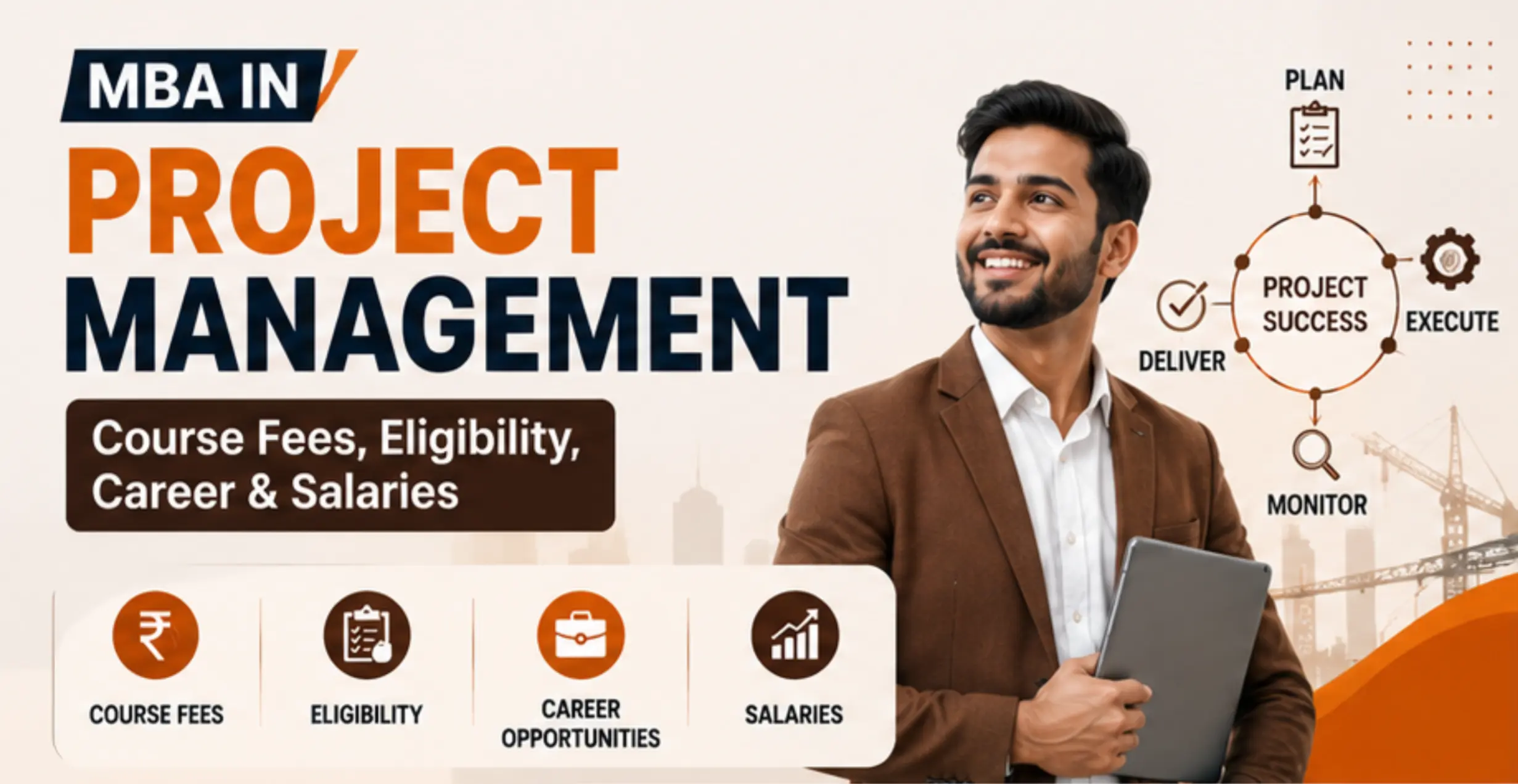
JIIT Online’s MBA in Project Management is designed for professionals facing a similar decision. The programme combines management foundations with project-focused learning so that you can continue working while preparing for responsibilities such as project planning, programme coordination, cost control and cross-functional leadership.
Why may this MBA be the right next step for a working project professional?
Aman does not need another course that only teaches project terminology. He needs a programme that helps him move from executing assigned work to taking ownership of scope, budgets, risks, teams and outcomes. That is the career gap this specialisation is meant to address.
The value of the programme is not limited to earning a postgraduate degree. Its relevance depends on whether the learning helps you handle larger and more complex responsibilities at work. The source document highlights capstone projects, case-based learning, live mentorship, career support and project-focused subjects. These features are most useful when you actively connect assignments to problems from your current role.
For Aman, that could mean using a risk-management framework to identify delays on a construction package, applying cost-control concepts to track overruns, or presenting a change request more confidently to senior stakeholders. For an IT professional, the same learning may support sprint planning, vendor coordination or programme governance.
The programme begins with broad management subjects before moving into project-specific decision-making. This matters because project leaders are rarely judged only on whether work finishes on time. They are also expected to understand finance, people, contracts, quality and business priorities.
| Stage | Learning focus | How it can support your career |
| Semester I | Economics, accounting, marketing, organisational behaviour, statistics, operations, finance and digital transformation | Builds the business vocabulary needed to communicate with finance, operations and senior management. |
| Semester II | Business law, HR, entrepreneurship, management accounting, research, analytics, digital marketing and capstone work | Helps you understand the functions and constraints that influence project decisions. |
| Semester III | AI in business, planning and scheduling, risk, procurement, contracts, quality and cost control | Develops the tools used when projects become larger, costlier and more dependent on multiple stakeholders. |
| Semester IV | Strategy, programme and portfolio management, Agile and Scrum, global delivery and a major capstone | Prepares you to think beyond one project and contribute to programme-level or portfolio-level decisions. |
Before enrolling, review the latest curriculum and confirm that the project-focused subjects are offered in the batch you are considering. This helps you judge whether the programme addresses the exact capability gap between your current role and the role you want next.
The course can support different career paths, but the reason for joining should be specific. A general desire to “grow” is not enough. You should be able to name the responsibility you want to take on after completing the programme.
You already coordinate people, timelines or vendors, but senior roles require stronger commercial and strategic judgement. The programme can help you build the broader management capability needed to move towards project manager, PMO or programme responsibilities. Aman fits this profile because his challenge is not entering the workforce. It is proving that he can lead beyond day-to-day execution.
You may work in software, operations, finance, procurement, consulting or quality and regularly contribute to projects without formally owning them. Project planning, risk, contracts and programme-management subjects can help you prepare for a role in which you coordinate multiple functions rather than contribute from only one.
You may have an engineering, architecture, commerce or management background and want to build towards project coordination or PMO roles. In this case, the MBA can provide structured management learning, but you should also seek internships, live assignments or workplace exposure because a degree alone does not replace practical project experience.
For Aman, flexibility is not a convenience. It determines whether he can complete the degree without compromising his job. Site reviews may overrun, vendors may call outside office hours, and travel can disrupt a fixed study routine. Live sessions, recordings, mobile access and LMS-based resources can make the programme workable, but only if he sets aside regular study time.
The source document also mentions peer groups, a relationship manager and technical support. Confirm the current availability and service scope of these features during counselling.
The original content presented fixed salary ranges, but an MBA cannot guarantee a particular package or promotion. Career outcomes depend on your prior experience, industry, city, performance, network and how effectively you demonstrate new capabilities.
A more useful question for Aman is: “What responsibilities should I be ready to handle after this programme that I cannot confidently handle today?” The table below shows realistic directions rather than promised outcomes.
| Current position | Possible next direction | Capability to demonstrate |
| Project coordinator or site engineer | Project manager or package lead | Planning, budgeting, risk ownership and stakeholder communication |
| Business analyst or delivery associate | PMO analyst, scrum lead or delivery manager | Governance, reporting, Agile practices and cross-functional coordination |
| Operations or procurement professional | Project or programme coordination | Contracts, vendor management, cost control and execution planning |
| Experienced project manager | Programme or portfolio responsibility | Strategic alignment, prioritisation, governance and leadership across projects |
Career support can strengthen this transition, but it should be assessed carefully. The source document refers to job-portal access, placement support for selected learners, CV preparation, mock interviews and alumni connections. Ask the counsellor which services apply to your cohort, whether eligibility conditions exist and how support differs from a guaranteed placement.
A persuasive programme choice should be based on fit, not claims that one university is automatically better than every alternative. JIIT Online may be a strong option when you need an online MBA structure, project-focused subjects and the ability to continue working while studying.
For Aman, the decision becomes clearer when he compares these features with his actual career gap. If he needs deeper project leadership, commercial understanding and a recognised management qualification without leaving his job, the programme addresses the right problem. If he only needs a short technical credential in project processes, a certification such as PMP may be more focused.
| Choose an MBA when you need | Choose a project certification when you need |
| Broader knowledge of finance, strategy, leadership, marketing and operations | Focused validation of project-management methods and experience |
| Preparation for business, programme or portfolio responsibilities | A shorter credential linked closely to project practice |
| A postgraduate management degree alongside project specialisation | A certification that complements an existing degree or management background |
The two routes are not mutually exclusive. An experienced professional may eventually use both, but the correct starting point depends on whether the immediate gap is broad management capability or formal project-methodology validation.
Before applying, complete this sentence: “Within the next three years, I want to move from ______ to ______, and I need stronger skills in ______ to make that transition.”
Aman’s answer might be: “I want to move from site engineer to project manager, and I need stronger skills in budgeting, risk, contracts and stakeholder leadership.” Because the programme subjects align with those gaps and the online format allows him to keep working, enrolling becomes a reasoned career decision rather than an impulse purchase.
Your answer may be different. Use it to question the counsellor, review the curriculum and judge whether this programme supports the role you are actively pursuing. A course is worth joining when its structure, subjects and support services reduce the distance between your current responsibilities and your intended career path.
If you are already coordinating teams, timelines, vendors or client expectations but still feel limited to execution-focused roles, an MBA in Project Management can help you build the broader skills needed for the next stage of your career. The goal is not simply to earn another qualification. It is to understand how projects connect with finance, strategy, risk, stakeholder management and business outcomes.
For professionals like Aman, the right programme must fit around work while also helping them prepare for greater responsibility. JIIT Online’s MBA in Project Management is designed for this transition by combining management foundations, project-focused learning, live mentorship and flexible online delivery.
The programme may be a suitable choice if you want to move from supporting projects to leading them, manage larger budgets and teams, or prepare for programme and portfolio-level responsibilities without leaving your current job. Before applying, review the curriculum, eligibility, fee structure and learning schedule to confirm that they match your career plan.
It is most relevant to working professionals who already contribute to projects and want to move into wider planning, budget, risk, stakeholder or programme responsibilities. Early-career graduates may also consider it, but should combine the degree with practical project exposure.
The source document states that applicants need a three-year bachelor’s degree from a recognised institution with at least 40 percent aggregate marks and all subjects cleared. Confirm the latest eligibility and documentation requirements before applying.
The source document describes the admission process as merit-based and states that CAT or GMAT is not required for this standard MBA route. Applicants should verify the current admission process with JIIT Online.
The online format, live sessions and recorded learning are intended for working professionals. Completion still requires a consistent weekly schedule for classes, readings, assignments and assessments.
The source document lists a total fee of Rs. 1,75,000 for the two-year programme and refers to EMI options. Ask for the current fee schedule, inclusions, payment terms and any financing conditions before enrolling.
No course can guarantee a particular role, promotion or salary. The programme can help you build relevant knowledge and demonstrate broader capability, but outcomes depend on your prior experience, performance, industry and career effort.
Choose the MBA when you need broader management and leadership development alongside project learning. Consider PMP when your primary need is validation of project-management experience and methodology. Some professionals pursue both at different stages.
Review the latest curriculum, class schedule, assessment method, faculty involvement, career-support terms, fee structure and current regulatory information. Then compare them with the exact role you want next.