

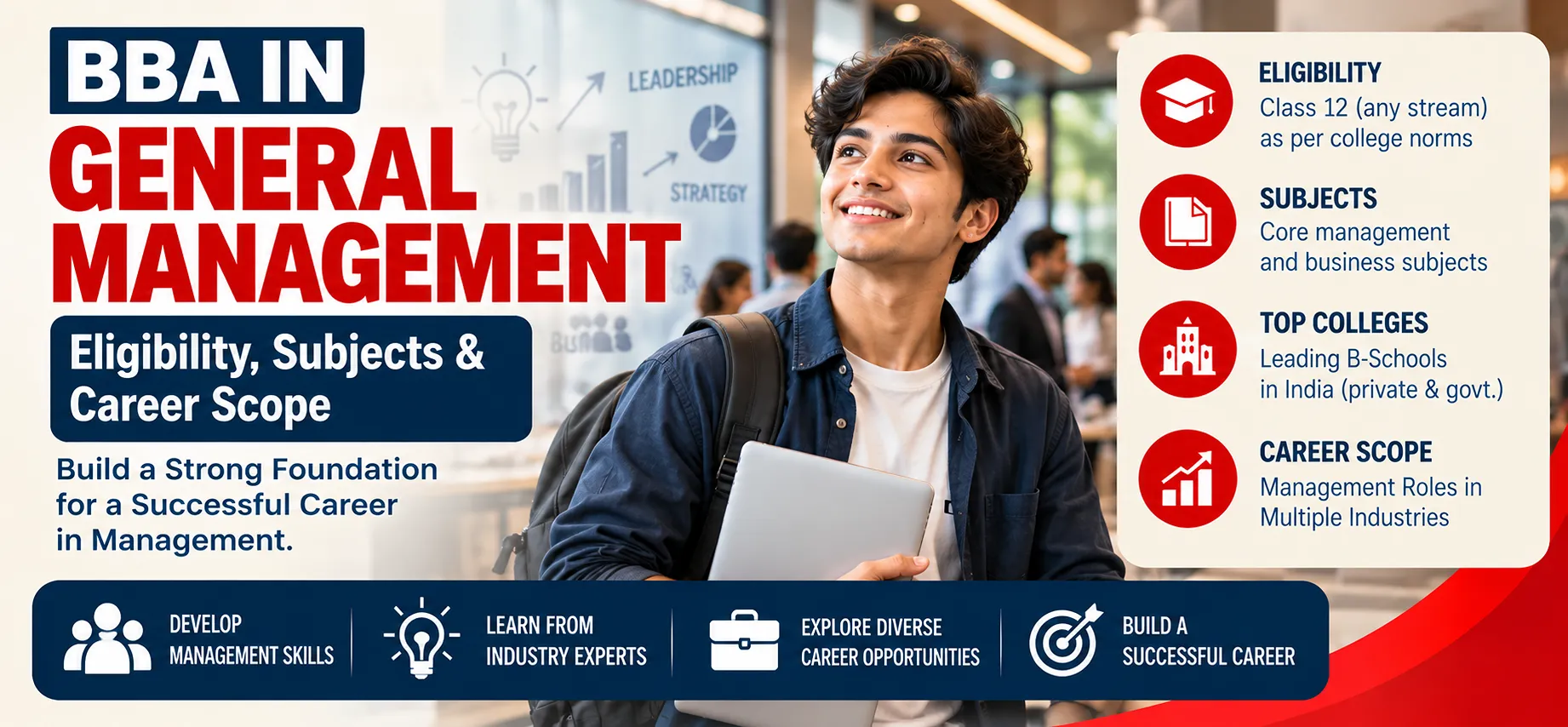




BBA in General Management: Eligibility, Subjects & Career Scope
A BBA in general management is a three-year undergraduate business degree covering management fundamentals, marketing, finance, HR, operations,…
Read More →

An online BBA HR Management programme introduces learners to the strategic influence of people management within contemporary organisations while offering the flexibility of digital study alongside a solid grounding in core business disciplines. Human resources shape workplace culture and guide talent development while strengthening organisational capability, which makes skilled HR professionals increasingly valuable in evolving corporate environments. Pursuing an HR specialisation in BBA enables students to gain insight into workforce planning and employee relations while strengthening managerial judgement that supports organisational stability and long term progress. Graduates pursuing a Human Resource career often discover opportunities across diverse sectors where organisations seek professionals capable of nurturing talent and sustaining productive workplaces.
A BBA in human resource management is a three-year undergraduate degree that pairs core business education with people-management study. At JIIT Online, the BBA HR course runs across six semesters, covering Human Resource Management, Organisational Behaviour and HR electives alongside finance, marketing and analytics fundamentals.
Understanding the admission requirements helps students evaluate whether they are prepared to pursue an HR specialisation in BBA through an online learning format. Most universities follow straightforward eligibility guidelines so that students from different academic backgrounds can apply after completing their higher secondary education. Although the exact criteria may vary slightly across institutions, the common requirements usually include the following.
| Eligibility Requirement | Explanation |
| Completion of 10+2 from a recognised board | Applicants must have successfully completed higher secondary education from a recognised education board |
| Minimum qualifying marks | Many universities specify a minimum percentage in the 10+2 examination although the required score may differ depending on institutional admission policies |
| Entrance test or merit based admission | Some institutions grant admission through merit lists based on academic scores, whereas others may consider entrance assessments, such as CUET, or institution level aptitude tests |
| Basic communication and analytical skills | Candidates benefit from strong written and verbal communication abilities along with analytical thinking, because these skills support effective learning in management and human resource subjects |
The Online BBA at JIIT is priced as a single programme fee covering all six semesters. There is no separate specialisation charge for choosing HR electives, and the fee can be paid in installments through zero-cost EMI.
| Component | Details |
|---|---|
| Total Programme Fee | ₹1,39,000 |
| Duration | 3 years / 6 semesters |
| Specialisation Charge | None – HR electives are included in the programme fee |
| Payment Options | Zero-cost EMI; UPI, credit/debit card, net banking |
| Jaypee Employee Discount | 50% off tuition fee (Employee ID proof required) |
| Jaypee Alumni Discount | ₹45,000 off tuition fee (degree or passing certificate required) |
| Defence Scholarship | Available for SSB and CRPF personnel |
| Included in the Fee | Live and recorded sessions, learning material, Harvard Business School certifications, Grammarly, HRFY.ai, welcome kit |
The JIIT Online BBA syllabus runs across six semesters. Core business subjects build the foundation in the first four, while HR-focused papers and Discipline Specific Electives (DSE) let students shape a BBA with HR from Semester III onward.
Business Mathematics
Managerial Economics · Financial Accounting · Principles of Business Management · Business Communication · India’s Diversity & Business · IT Tools for Business
Financial Management · Organizational Behaviour · Marketing Management · Introduction to Spreadsheets · Global Business Environment · Business Statistics and Analytics · Technology, Corporate Governance and Business Ethics
Cost and Management Accounting · Entrepreneurial Development · Social Media and Digital Marketing · Human Resource Management · Business Analytics · Oral and Written Communication · Emotional Intelligence
Introduction to Business Verticals · Business Research Methods · Operations Management · Data Insights Using Dashboards · Quantitative Techniques in Business Management · Legal Aspects of Business · Social and Professional Skills
Computing Tools and Programming · Digital Business Transactions · Live Project / Research Project · Major Elective 1 (DSE) · Major Elective 2 (DSE) · Marketing Analytics
Disaster Management · Supply Chain Management · Corporate Internship · Understanding Constitution of India · Major Elective 3 (DSE) · Major Elective 4 (DSE)
The academic structure introduces students to core business knowledge alongside specialised human resource studies so that they gain a balanced understanding of organisational operations and workforce management. These subjects gradually build the knowledge and practical insight required for students who aim to pursue a Human Resources career across different industries.
| Subject | Description |
| Principles of Management | Introduces essential management concepts, such as planning, decision-making, leadership approaches, and organisational coordination that guide everyday business activities |
| Business Communication | Develops professional communication abilities used for workplace interaction, presentations, business reports, and formal correspondence |
| Business Economics | Explains economic concepts that influence business decisions, including market behaviour, resource allocation, demand patterns, and pricing strategies |
| Marketing Fundamentals | Provides an understanding of marketing principles, consumer behaviour branding approaches, and market research used to promote products and services |
| Financial Accounting | Teaches the fundamentals of financial records, balance sheets, income statements, and accounting methods used to track organisational finances |
| Subject | Description |
| Human Resource Management | Introduces the structure of HR functions, including workforce planning, employee engagement, and talent development practices |
| Recruitment and Selection | Focuses on hiring strategies, candidate assessment methods, and recruitment procedures used to identify suitable employees |
| Performance Management | Explains performance evaluation, systems appraisal techniques, and goal setting frameworks that help in supporting employee productivity |
| Employee Relations | Examines workplace relationships, conflict management approaches, and engagement initiatives that encourage a cooperative work environment |
| Training and Development | Covers learning programmes, skill development initiatives, and professional growth activities that strengthen workforce capabilities |
| Compensation Management | Explores salary structures, incentive plans, and employee benefits designed to maintain fairness, encourage motivation and support workforce stability |
Pursuing an Online BBA HR specialisation helps students build practical abilities that strengthen workplace effectiveness and professional readiness. These competencies prepare graduates for a Human Resource career because organisations increasingly value professionals who understand how to manage people, support employee development, and contribute to organisational progress.
Human resource professionals play an essential role in organisations because every company depends on skilled employees, effective workplace policies, and structured people management practices. Businesses across industries, therefore, require trained HR personnel who can support recruitment, employee development and organisational culture, which creates strong opportunities for graduates pursuing a Human Resource career.
| Job Role | What It Includes | Average Salary (India) |
| HR Executive | Supports daily HR operations, including employee documentation, attendance records, recruitment coordination and communication between employees and management | ₹3–5 LPA |
| Recruitment Coordinator | Assists hiring teams through candidate screening, interview scheduling, job posting management and communication with applicants during recruitment processes | ₹3–4.5 LPA |
| Training Assistant | Helps organise employee training programmes, learning workshops and skill development sessions that strengthen workforce capabilities | ₹2.5–4 LPA |
| HR Analyst | Works with employee data performance metrics and HR reports to support workforce planning and improve organisational decision making | ₹4–6 LPA |
| Talent Acquisition Specialist | Manages recruitment strategies, talent sourcing, candidate evaluation and employer branding initiatives that help organisations attract skilled professionals | ₹4–7 LPA |
| Employee Relations Executive | Handles workplace concerns, employee engagement initiatives, conflict resolution processes and internal communication to maintain a positive work environment | ₹3–5 LPA |
Graduates preparing for a Human Resources career find opportunities in a wide range of sectors that require skilled individuals to coordinate hiring, support employee engagement initiatives, and maintain productive workplace environments.
✔ Corporate organisations: Large companies employ dedicated teams to oversee recruitment processes, manage employee documentation, support performance evaluations and maintain internal workplace policies across departments.
✔ IT companies: Rapid expansion and specialised talent requirements create demand for individuals who manage hiring pipelines, coordinate onboarding programmes, and support learning initiatives for technical teams.
✔ Consulting firms: Work often involves assisting businesses with workforce planning, organisational restructuring initiatives, and talent development strategies designed to improve operational performance.
✔ Healthcare sector: Hospitals and medical institutions require support for staff coordination, training programmes, compliance monitoring, and communication between clinical and administrative teams.
✔ Manufacturing industries: Large operational environments depend on structured workforce planning, labour coordination, safety management policies, and employee development programmes.
✔ Retail and e-commerce companies: Expanding operations and large staff networks create the need for organised recruitment processes, employee engagement initiatives, and workforce coordination across multiple locations.
Human resource management offers a structured professional pathway where responsibilities gradually expand from operational tasks to strategic leadership positions. Experience in workforce management, employee development, and organisational planning often leads to higher roles that influence company culture decision making and long-term business direction.
✔ HR Executive: This entry-level role focuses on daily HR functions such as assisting recruitment processes, maintaining employee records, supporting onboarding activities and facilitating communication between employees and management teams. Individuals who pursue an HR specialisation in BBA often begin their professional journey in this position while gaining practical workplace experience.
✔ Senior HR Executive: At this stage, individuals handle broader responsibilities, including recruitment planning, employee engagement initiatives, policy implementation and coordination of HR activities across different departments.
✔ HR Manager: This position involves supervising HR teams, developing recruitment strategies, overseeing performance management systems and ensuring that organisational policies align with business objectives.
✔ HR Business Partner: Professionals in this role collaborate with senior leadership to align workforce strategies with organisational priorities while supporting talent development initiatives and long-term workforce planning. \
✔ Human Resource Director: This senior leadership position focuses on shaping company-wide HR strategies, strengthening organisational culture, guiding leadership development frameworks and establishing workforce policies that support sustainable organisational growth.
An Online BBA with an HR specialisation gives you a full business degree and a people-management focus in the same three years. At JIIT Online, that means a UGC-entitled qualification from a NAAC ‘A’ accredited institution, a six-semester syllabus with Human Resource Management and Organisational Behaviour built in, four elective slots to deepen the HR track, and a corporate internship in the final semester — at a total fee of ₹1,39,000 with zero-cost EMI. Admissions for 2026 are open. Call 9999362062 or apply at admission.jiitonline.com.
Many online BBA HR Management programmes include practical components such as case studies, virtual projects, HR simulations, and internships. These activities help students understand real workplace challenges, including recruitment planning, employee engagement strategies, and organisational behaviour management.
Human resource management drives organisational success through strategic talent acquisition, ongoing employee development, fair performance evaluation, and positive workplace culture. HR professionals keep employees motivated, productive, and aligned with business goals, enhancing efficiency, engagement, and long-term organisational growth.
Modern HR professionals use several digital tools, including Human Resource Information Systems, HR analytics software, recruitment platforms and employee management systems. These technologies help HR teams manage employee data, streamline recruitment, and analyse workforce performance.
Yes, BBA graduates with an HR specialisation can pursue international careers, particularly in multinational corporations, global consulting firms, and international organisations. Relevant certifications, strong communication skills, and cross-cultural management knowledge significantly enhance their global employability and long-term career growth prospects.
HR graduates can boost their careers through HR analytics, talent management, labour law certifications, and professional HR credentials, enhancing specialised knowledge and improving advancement opportunities.
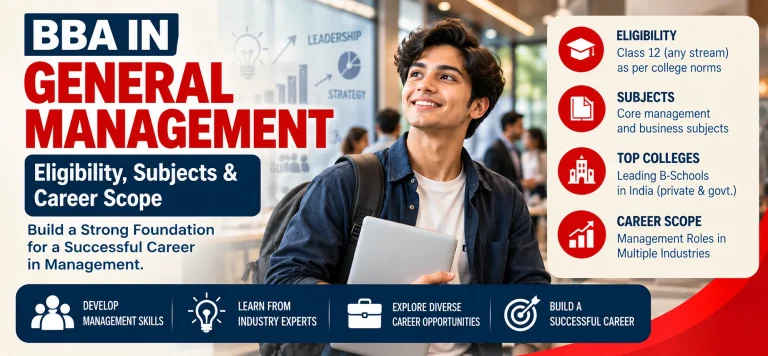
A BBA in general management is a three-year undergraduate business degree covering management fundamentals, marketing, finance, HR, operations,…
Read More →
Trying to choose between business analytics and marketing? The two can lead to very different day-to-day work, even…
Read More →
Ever thought about what happens after you place an online order and before it reaches your doorstep? A…
Read More →
Ever wondered how a business can sell, grow, and compete in different countries? A BBA in Global Business…
Read More →
Just finished Class 12 and interested in how businesses work across countries? A BBA in Foreign Trade can…
Read More →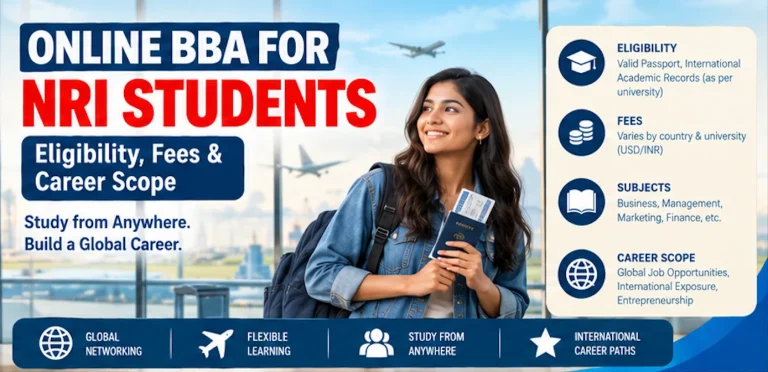
Want to pursue a BBA from India while continuing to live abroad? An online BBA for NRI students…
Read More →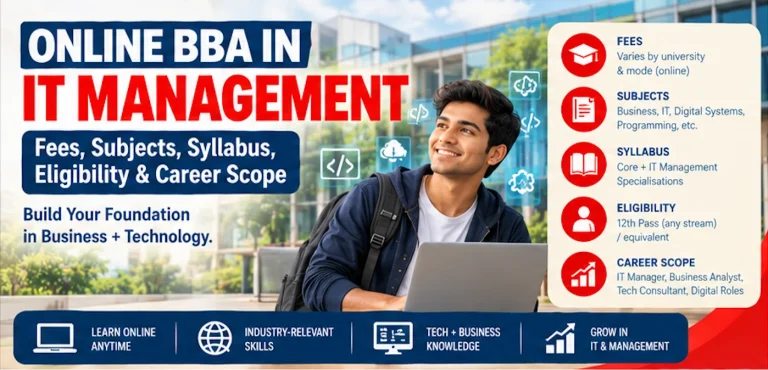
Technology now plays a big role in how businesses work, and a BBA IT course helps you understand…
Read More →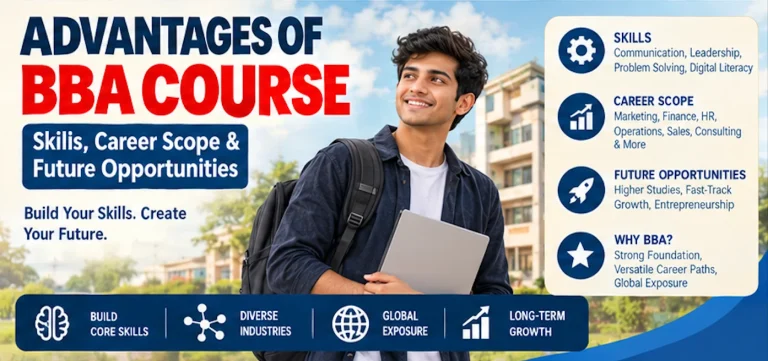
Not sure which area of business interests you most yet? A BBA gives you the chance to explore…
Read More →
A BBA in Hotel Management suits students who want to understand the business side of hospitality, including hotel…
Read More →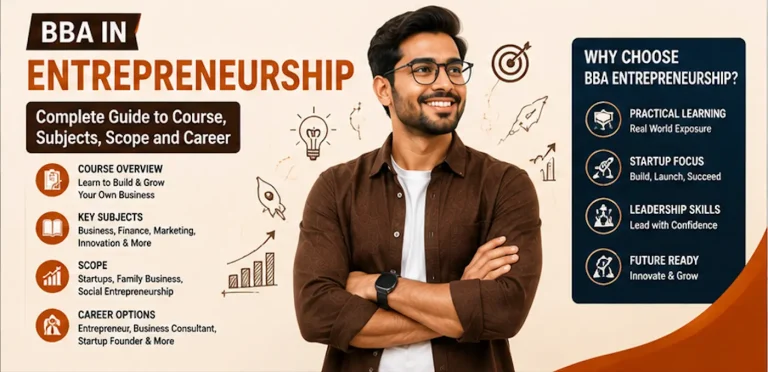
A BBA in Entrepreneurship can suit students who want to understand how ideas become viable businesses, whether they…
Read More →