
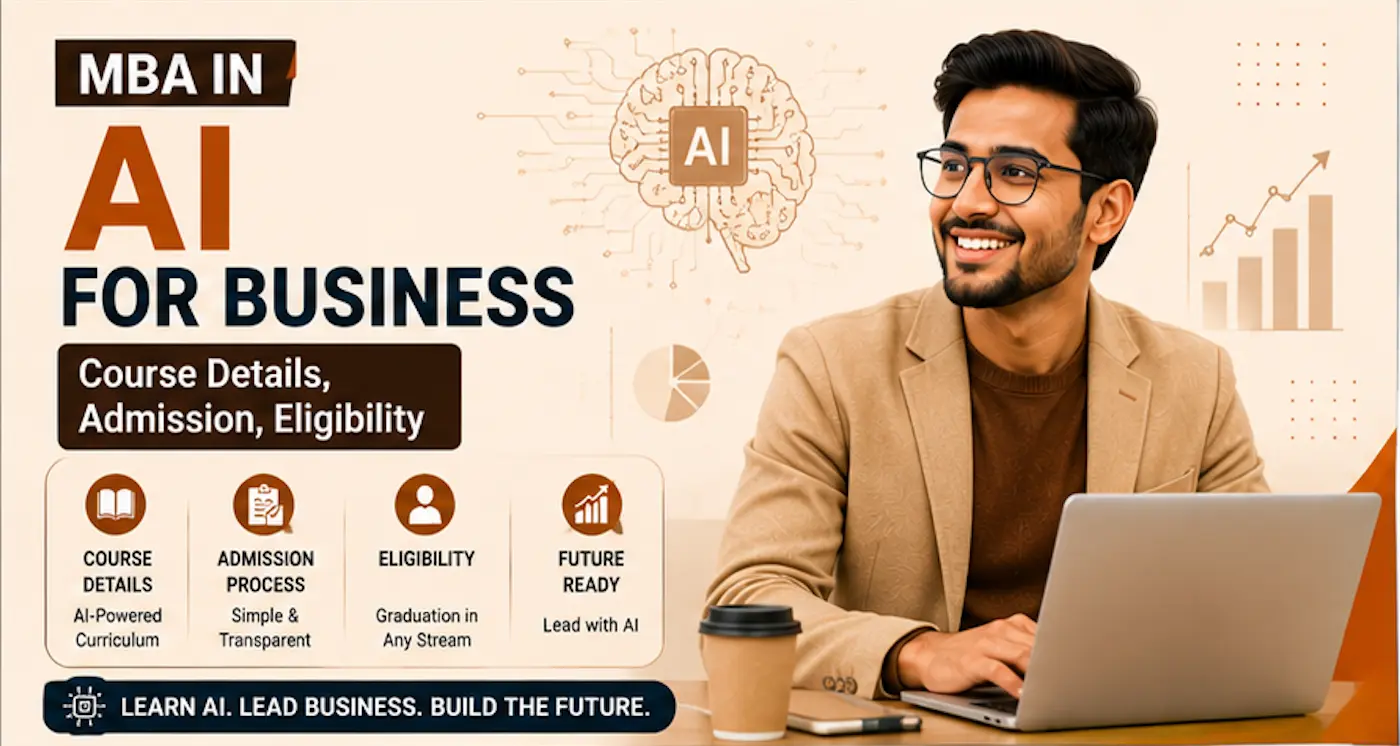
MBA in AI for Business Course Details, Admission, Eligibility
Artificial intelligence is changing how organisations forecast demand, personalise customer journeys, manage risk and automate decisions. An MBA…
Read More →
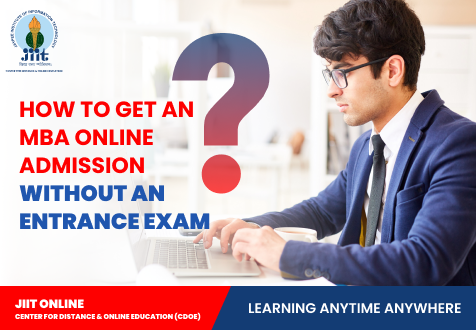
An MBA without an entrance exam can help eligible graduates and working professionals begin management education without preparing for CAT or MAT. If you are asking, “can I do MBA without entrance exam?” or “can I get admission in MBA without entrance exam?”, the answer depends on the university. Many online programmes assess graduation marks and documents, while some use an internal aptitude test or interview instead of a national examination.
A test-free or CAT/MAT-free route does not mean automatic admission. Universities still verify academic eligibility and may use one of the following pathways:
Reader check: Confirm whether the programme offers genuine direct admission or replaces national tests with an internal assessment. Review the current official prospectus before paying any fee.
The following institutions are commonly considered by applicants seeking an online MBA without CAT or MAT. Admission rules can change, so candidates should verify the current programme page before applying:
This distinction matters: “without CAT or MAT” is not always the same as “without any entrance assessment”. Compare recognition, eligibility, fees, curriculum and selection requirements together.
Many universities now offer an MBA without an entrance exam because online programmes serve fresh graduates, working professionals and career switchers with varied backgrounds. Instead of relying only on CAT or MAT scores, institutions may assess graduation marks, document accuracy, professional exposure and programme readiness. This broader approach can simplify access, but applicants must still meet the published eligibility criteria and complete every verification step.
To improve your chances of admission, first shortlist recognised universities whose current rules allow direct or merit-based selection. Check the minimum graduation score, prepare complete academic and identity documents, and explain your career goal clearly if an interview is required. When asking, “can I get admission in MBA without entrance exam?”, verify whether the institution uses an internal test, because policies differ across universities and admission cycles.
Many online and executive MBA programs now prioritise professional experience as a stronger indicator of success than traditional test scores. Individuals with 3, 5, or even 10+ years of work experience already possess practical skills such as teamwork, decision-making, managing deadlines, and handling responsibilities. For this reason, a large number of institutions offering executive and online MBA programs no longer require entrance exam scores for admission.
In fact, most online MBA programs were originally designed specifically for working professionals. Therefore, it is natural that real-world achievements hold more weight than performance on a speed-based academic exam.
When test scores are not used, the rest of the application must be accurate and credible. Strengthen your academic record, CV, statement of purpose and explanation of career goals. Highlight relevant projects, promotions, certifications or responsibilities without exaggeration. Ensure names and marks match official documents. For JIIT Online, applicants should also confirm current eligibility, upload the required certificates and complete the official online application process carefully.
Admissions committees today evaluate applicants more holistically instead of focusing solely on test results. They assess academic background, clarity of career goals, professional experience, personal achievements, the depth and quality of essays, and overall growth potential. This approach offers a more accurate representation of candidates and enables each applicant to present their true capabilities.
The expansion of digital education has transformed business learning. Students now come from multiple countries, work across different time zones, and represent a wide range of professional backgrounds. For such diverse learners, strict entrance exams often act as unnecessary barriers.
Therefore, online MBA admissions have evolved to become more flexible and accessible. The goal is to support working professionals managing careers, family responsibilities, and other commitments, making business education more inclusive and opportunity-driven than ever before.
This is the most common and trusted pathway. If a professional has a solid number of years in the workplace, many universities will waive the entrance exam requirement. Some schools expect 5 years, some prefer 7 years, and a few even accept 3 years if their experience is meaningful.
The key here is how students present their achievements. Instead of listing only job titles, focus on impact. For example:
When showing measurable results, it will strengthen the online MBA admission application. Mention promotions, awards, and improvements brought to the company.
Students with a strong CGPA can often qualify for exam-free online MBA admission. Many universities set benchmarks such as a GPA above 3.2 or 3.5. More important than the score itself is the relevance of the coursework completed during their undergraduate studies.
Students who have studied subjects like mathematics, statistics, commerce, economics, accounting, or finance demonstrate readiness for MBA-level quantitative courses. Strong performance in these areas helps applicants present themselves as capable and confident, even without CAT, GMAT, or GRE scores.
Many universities provide default waivers for candidates who already hold advanced degrees, such as MS, JD, MD, PhD, or professional certifications like CPA or CFA. These qualifications indicate analytical ability, discipline, and preparedness, allowing streamlined online MBA admission without requiring entrance exams.
Certain private universities offer direct online MBA admission pathways that do not require test scores. Instead, these institutions conduct internal evaluations, such as short essays, aptitude questions, or brief interviews. This helps the admissions team understand applicants’ goals, work style, and comfort with online learning.
Many fully online universities and digital campuses have adopted this flexible approach, making the admission process more practical, convenient, and accessible for students from diverse academic and professional backgrounds.
The Statement of Purpose (SOP) is the space where an applicant’s journey, goals, and motivation come together. A well-structured account of past experiences and future plans gives the admissions panel a clear understanding of why the candidate is pursuing an online MBA. Highlighting examples of analytical work, project involvement, and measurable results demonstrates readiness for the program’s quantitative coursework.
Recommenders who have closely observed the applicant’s growth should provide valuable and insightful feedback. Their letters should emphasise professional responsibility, work ethic, problem-solving skills, and the ability to handle academic challenges. Such endorsements significantly strengthen an online MBA admission profile.
In the absence of an entrance exam, the interview or group discussion serves as the primary evaluation stage. Key indicators of potential include clear communication, consistent confidence, and an honest representation of professional achievements. Admissions teams look for commitment, discipline, and the ability to manage the rigours of graduate-level management education. The focus is on understanding motivation and preparation rather than perfection.
An MBA without an entrance exam can provide a practical route for learners who meet academic requirements but do not want to delay their plans for CAT or MAT preparation. The simplest admission process is not automatically the best choice. Recognition, curriculum, specialisation, learning support and career relevance should carry more weight than convenience alone. JIIT Online currently presents a straightforward online MBA route for eligible graduates, with a two-year format and multiple management specialisations. Review the latest programme page, confirm the admission conditions and compare the course with your career objective. Once the programme fits your needs and documents are ready, complete the official application or speak with a counsellor for clarification before enrolment.
The next step is to explore programs that align with your personal goals, review the waiver policies, and understand the expectations each institution has for its applicants. Being clear about these aspects makes the journey ahead much easier to navigate.
Yes. Many Indian online MBA programmes use graduation marks and document verification instead. Some universities may still conduct an internal aptitude test or interview.
A simple process usually includes online registration, document upload, eligibility review and fee confirmation. JIIT Online follows a digital application route, subject to current eligibility checks.
JIIT Online and Chandigarh University Online publish routes without standard CAT or MAT requirements. Other universities may require an internal test, so verify current official criteria.
Artificial intelligence is changing how organisations forecast demand, personalise customer journeys, manage risk and automate decisions. An MBA…
Read More →
An MBA in Business Management is useful for learners who want broad management capability before committing deeply to…
Read More →
For professionals and graduates interested in cross-border markets, trade, global strategy or multinational operations, an MBA in International…
Read More →
An MBA in Sports Management can suit learners who want to work on the business side of sport…
Read More →
An MBA in Entrepreneurship helps learners understand how ideas become viable businesses, how ventures are financed and how…
Read More →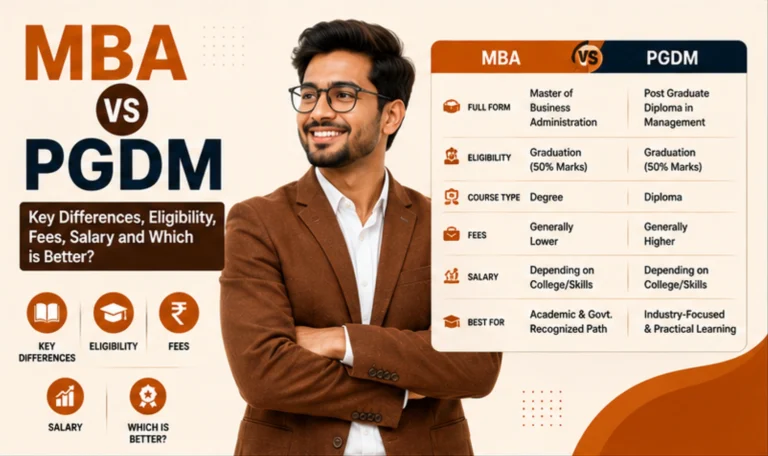
MBA vs PGDM at a glance: An MBA is a university-awarded postgraduate degree, while a PGDM is a…
Read More →
Priya is a 30-year-old marketing operations professional. She prepares campaign reports, tracks conversion numbers and works with dashboards…
Read More →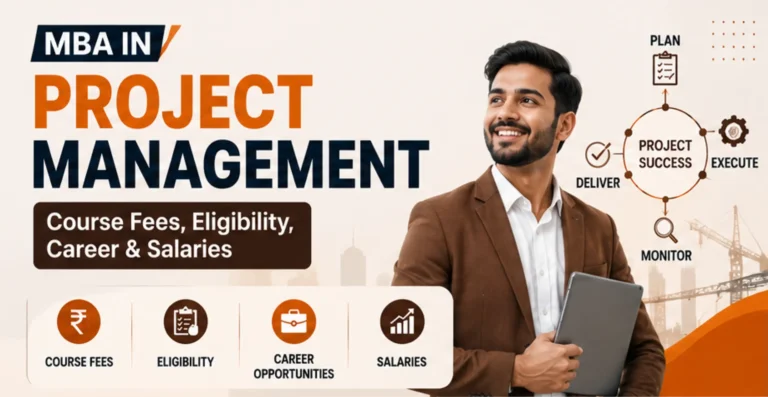
Move from coordinating tasks to leading projects that shape business outcomes Aman is a 29-year-old site engineer with…
Read More →
You have probably reached a familiar point. Perhaps you have three or four years of work experience and…
Read More →
A practical comparison framework for prospective students evaluating recognised online MBA programmes in India. The right online MBA…
Read More →